
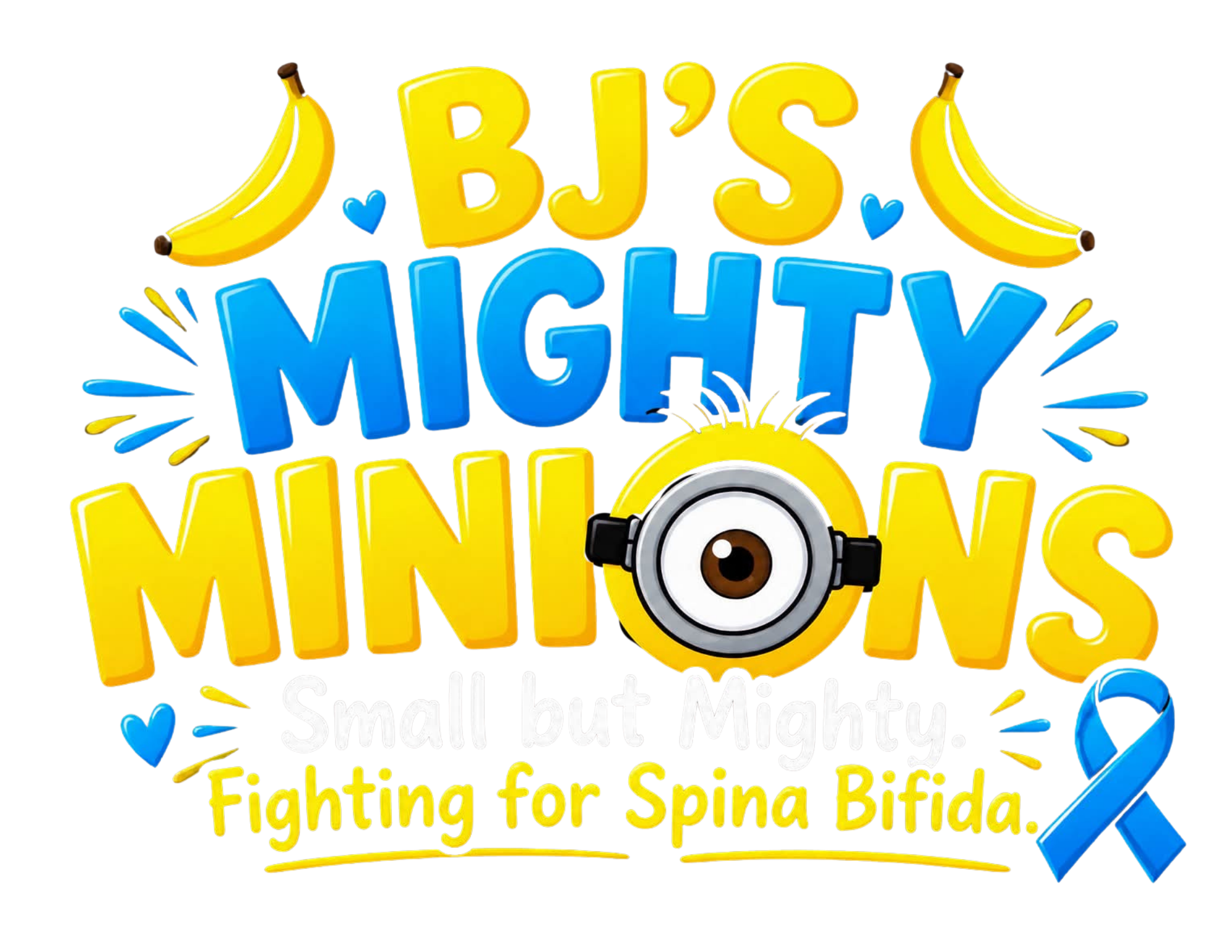
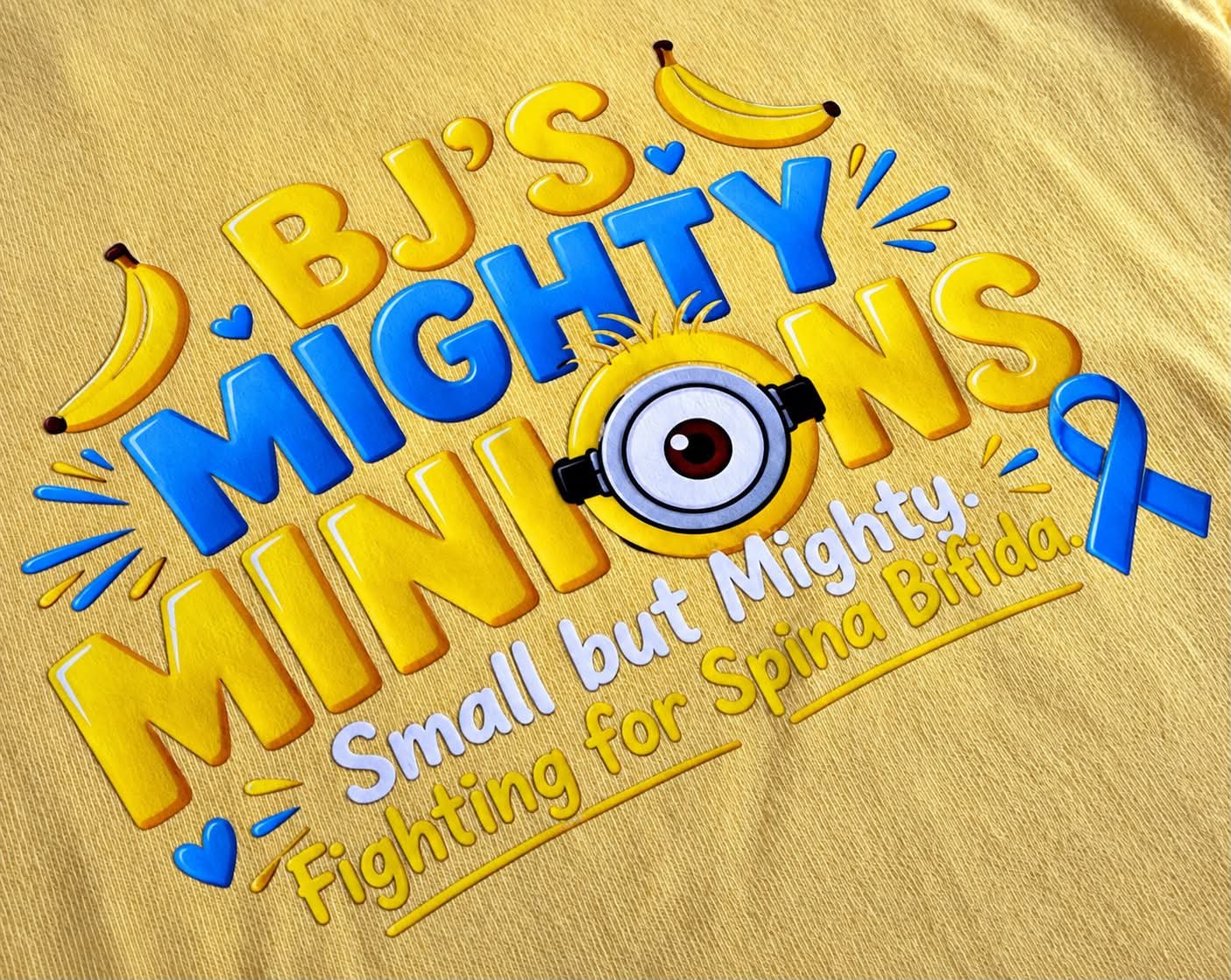
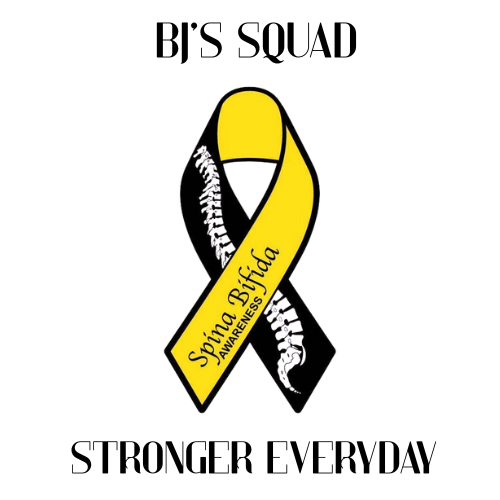
PLEASE CHOOSE SIZE THEN ADD TO CART TO CHOOSE DESIGN & SHIRT COLOR FOR MINIONS ONE!!!!
FOR EVERY SHIRT SOLD WE DONATE 25% BACK TO OUR LITTLE BUDDIES ORGANIZATION!!!
Spina Bifida Awareness
What is spina bifida?
Spina bifida is a neural tube birth defect that occurs when the spine and spinal cord don’t form properly during early fetal development. It can range from mild to severe and may affect mobility, bladder/bowel function, and other systems.
Why awareness matters
Early diagnosis and prenatal care can improve outcomes.
Awareness promotes understanding, reduces stigma, and supports inclusion for people living with spina bifida.
Increased awareness helps drive funding for research, therapies, accessibility, and family support services.
Common types
Spina bifida occulta: Often mild and may go unnoticed; spine has a small gap but spinal cord and nerves are usually fine.
Meningocele: A sac of fluid protrudes through the gap in the spine; nerves are typically less affected.
Myelomeningocele: The most severe form where spinal cord and nerves protrude through the opening, often causing significant disability.
Signs and challenges
Mobility differences (use of braces, walkers, or wheelchairs)
Hydrocephalus (fluid build-up in the brain) requiring shunt placement
Bladder and bowel management needs
Learning and attention challenges in some individuals
Need for ongoing medical, surgical, and therapy supports
How to support someone with spina bifida
Focus on abilities, not limitations; foster independence.
Offer practical help (transportation, accessible event planning).
Advocate for accessible spaces, educational accommodations, and inclusive activities.
Listen and ask how you can help—needs vary widely from person to person.
Support local and national organizations that provide information, medical resources, and family support.
Awareness actions you can take
Share accurate information to educate your community.
Participate in or organize fundraisers, awareness walks, or virtual events.
Promote inclusion in schools, workplaces, and public spaces.
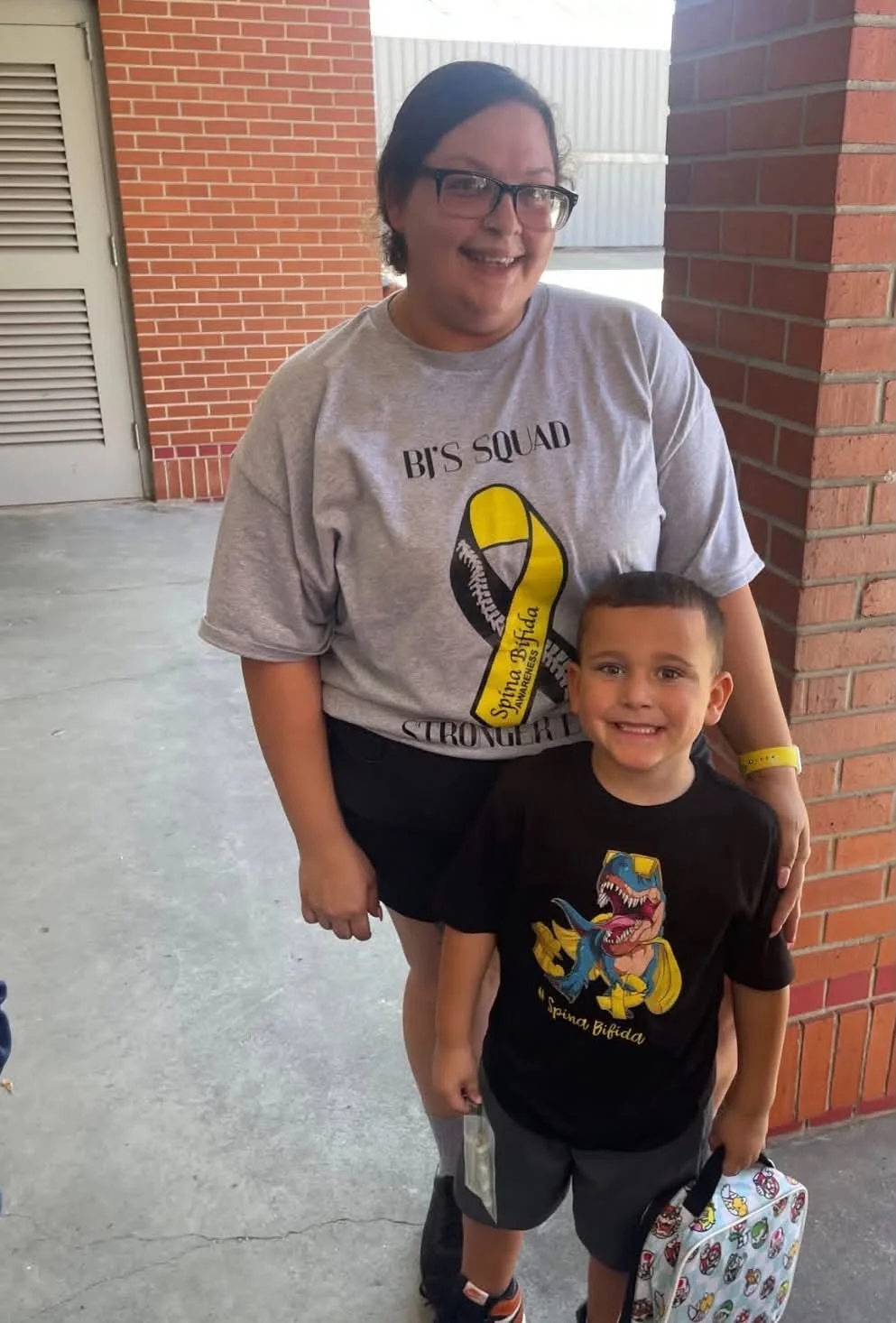
Shop and support small businesses that donate to spina bifida charities or create awareness products (custom shirts, decals, keepsakes) to celebrate and support the community.
Messages of solidarity
Celebrate strength, resilience, and individuality.
“Different, not less.” “Accessibility is a right.” “Support, don’t assume.”
Small acts of kindness and understanding make a big difference.
PLEASE CHOOSE SIZE THEN ADD TO CART TO CHOOSE DESIGN & SHIRT COLOR FOR MINIONS ONE!!!!
FOR EVERY SHIRT SOLD WE DONATE 25% BACK TO OUR LITTLE BUDDIES ORGANIZATION!!!
Spina Bifida Awareness
What is spina bifida?
Spina bifida is a neural tube birth defect that occurs when the spine and spinal cord don’t form properly during early fetal development. It can range from mild to severe and may affect mobility, bladder/bowel function, and other systems.
Why awareness matters
Early diagnosis and prenatal care can improve outcomes.
Awareness promotes understanding, reduces stigma, and supports inclusion for people living with spina bifida.
Increased awareness helps drive funding for research, therapies, accessibility, and family support services.
Common types
Spina bifida occulta: Often mild and may go unnoticed; spine has a small gap but spinal cord and nerves are usually fine.
Meningocele: A sac of fluid protrudes through the gap in the spine; nerves are typically less affected.
Myelomeningocele: The most severe form where spinal cord and nerves protrude through the opening, often causing significant disability.
Signs and challenges
Mobility differences (use of braces, walkers, or wheelchairs)
Hydrocephalus (fluid build-up in the brain) requiring shunt placement
Bladder and bowel management needs
Learning and attention challenges in some individuals
Need for ongoing medical, surgical, and therapy supports
How to support someone with spina bifida
Focus on abilities, not limitations; foster independence.
Offer practical help (transportation, accessible event planning).
Advocate for accessible spaces, educational accommodations, and inclusive activities.
Listen and ask how you can help—needs vary widely from person to person.
Support local and national organizations that provide information, medical resources, and family support.
Awareness actions you can take
Share accurate information to educate your community.
Participate in or organize fundraisers, awareness walks, or virtual events.
Promote inclusion in schools, workplaces, and public spaces.
Shop and support small businesses that donate to spina bifida charities or create awareness products (custom shirts, decals, keepsakes) to celebrate and support the community.
Messages of solidarity
Celebrate strength, resilience, and individuality.
“Different, not less.” “Accessibility is a right.” “Support, don’t assume.”
Small acts of kindness and understanding make a big difference.